CIRCE-centret har officiellt invigts
Continue reading
Uniting Biology, Medicine, and Society

Women’s cancers affect nearly every household. Their causes and consequences extend far beyond biology, influencing families, healthcare systems, and society as a whole. Yet the many factors that shape cancer risk and outcomes − from genetics and reproductive history to environmental exposures and socioeconomic conditions − are too often studied separately.
CIRCE brings together researchers across biology, medicine, public health, epidemiology, psychology, economics, and data science to understand women’s cancers across the life course. By integrating these disciplines, we aim to advance prevention, enable earlier diagnosis, improve treatment and survivorship, and reduce inequalities in cancer care.
Based at Lund University and developed in partnership with Skåne University Hospital and leading international collaborators, CIRCE is building one of Europe’s leading interdisciplinary centers for women’s cancer research.
Together, we are creating knowledge that can improve the lives of women today and for generations to come.

CIRCE brings together more than 100 researchers across three faculties at Lund University and Skåne University Hospital to address women's cancer through a shared, long-term vision. By combining expertise across disciplines, the center creates opportunities for research that would not be possible within a single field.
Supported by up to ten years of funding from FORTE and the Swedish Research Council, CIRCE provides a long-term environment for interdisciplinary research, education, and collaboration. Our five interconnected workstreams span prevention, diagnosis, treatment, survivorship, and equity, while linking laboratory science, clinical medicine, public health, epidemiology, psychology, economics, and data science.
Together, these activities create a research ecosystem that accelerates discovery, trains the next generation of scientists, and translates new knowledge into better healthcare and public policy.

Women’s cancers are increasing in incidence and remain a major cause of illness and death worldwide. Yet important questions about cancer risk, prevention, treatment response, survivorship, and health inequalities remain unanswered.
Many women also face unequal access to early diagnosis, treatment, rehabilitation, and support – challenges shaped not only by biology, but also by social and economic factors. CIRCE addresses these challenges by combining expertise across disciplines and integrating genetic, clinical, population, and societal data.
Through interdisciplinary collaboration, CIRCE aims to generate knowledge that improves prevention, enables more personalized care, reduces disparities, and ultimately improves outcomes and quality of life for women affected by cancer.

Our Research Areas
CIRCE advances interdisciplinary research across the full spectrum of women’s cancer, from prevention and early detection to treatment, survivorship, and equitable care.
Our researchUnderstanding why cancer develops is the first step toward preventing it. We study how genetics, reproductive history, lifestyle, environmental exposures, and social factors interact to influence cancer risk. Our goal is to identify women at higher risk and support more personalized prevention and screening.
Cancer treatments do not affect everyone in the same way. We investigate why some patients benefit more than others, who is at greater risk of side effects, and how treatments can be better tailored to each individual. Our research aims to improve outcomes while reducing unnecessary harm.
More women are living long lives after cancer than ever before, but many continue to face physical, emotional, and social challenges. We study mental health, rehabilitation, family life, return to work, and long-term wellbeing. Our goal is to help every woman live well beyond cancer.
Where a woman lives, her education, income, or background should not determine her cancer outcomes. We investigate inequalities in prevention, diagnosis, treatment, clinical trial participation, and survivorship. By identifying barriers to care, we aim to support more equitable cancer care for everyone.
Better decisions require better data. We combine genomic, imaging, clinical, registry, and population data to better understand cancer and predict outcomes. This integrated approach supports more precise prevention, diagnosis, and treatment for every patient.
Great discoveries happen when people work together. CIRCE brings together researchers, healthcare professionals, patients, policymakers, and community partners to accelerate innovation and translate research into practice. We are also committed to training the next generation of interdisciplinary cancer researchers.

CIRCE welcomes collaboration across research, healthcare, industry, patient organizations, and the public sector.
Whether you are a researcher, clinician, student, policymaker, or community partner, we invite you to engage with our network through collaborative projects, seminars, training opportunities, and public outreach activities. Together, we aim to advance knowledge, strengthen collaboration, and improve outcomes for women affected by cancer.


CIRCE brings together researchers, clinicians, educators, and community partners with expertise spanning cancer biology, imaging, genomics, epidemiology, mental health, rehabilitation, public health, and health equity.
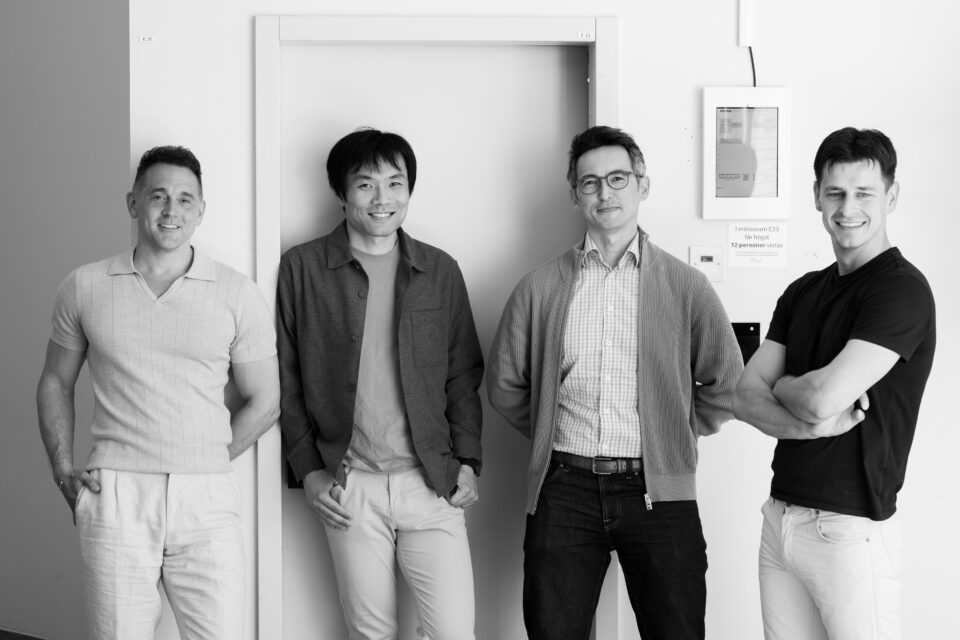
meet our team