

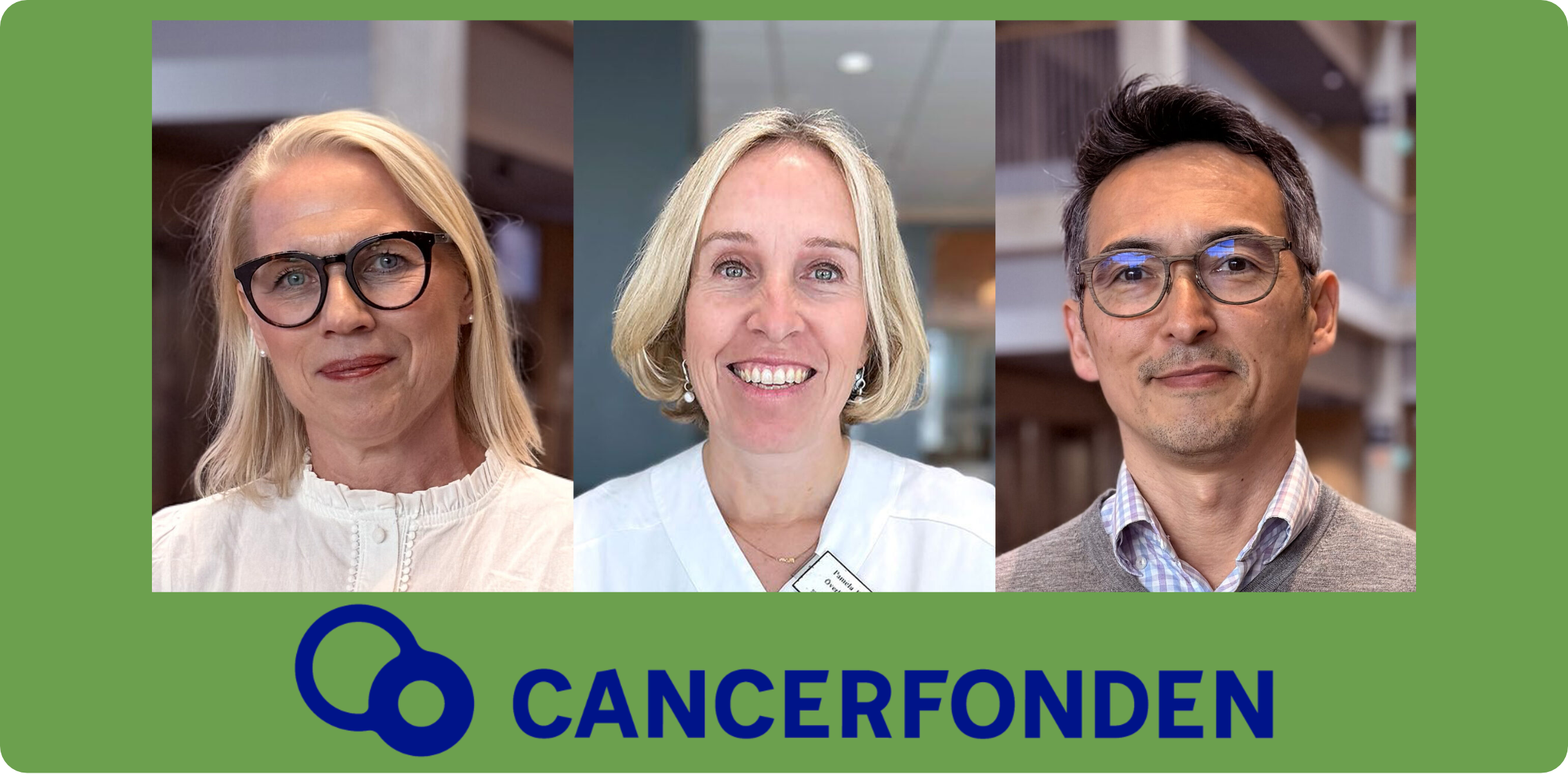
Three CIRCE principal investigators – Sophia Zackrisson, Pamela Buchwald, and Lao Saal – have been awarded research grants totalling SEK 29.75 million from the Swedish Cancer Society (Cancerfonden). The funding will advance personalized cancer screening, diagnostics, and treatment in breast and colorectal cancer.
Sophia Zackrisson – SEK 23 million
AI-enabled early detection and personalized breast cancer screening
CIRCE co-director Sophia Zackrisson has been awarded a major five-year grant to support development of more personalized screening strategies for breast cancer.
By combining artificial intelligence, advanced medical imaging, and individual risk assessment, the research aims to detect more cancers at an earlier stage while reducing unnecessary examinations. The project also incorporates women’s perspectives, health economics, and the evaluation of long-term outcomes to support clinical implementation. Together, the ambition is to develop a more accurate, person-centered, equitable, and resource-efficient approach to breast cancer screening.
Pamela Buchwald – SEK 3 million
Improving survival in colorectal cancer through tumor deposit research
CIRCE principal investigator Pamela Buchwald has received funding to continue her research on tumor deposits – small clusters of cancer cells that are separate from the primary tumor and lymph nodes and are associated with poorer survival.
By integrating registry data, medical imaging, and molecular analyses, the project aims to better understand the prognostic significance of tumor deposits and investigate whether they can be identified before surgery, supporting more individualized treatment strategies and improved patient outcomes.
Lao Saal – SEK 3.75 million
Advancing precision oncology in breast cancer
CIRCE co-director Lao Saal has received funding to advance precision oncology in breast cancer by integrating multimodal molecular profiles, polygenic risk scores, and circulating tumor DNA (ctDNA).
The project aims to bring these complementary approaches closer to clinical implementation, supporting more precise risk assessment, individualized treatment decisions, and disease monitoring.
Advancing CIRCE’s research mission
Together, these projects reflect several of CIRCE’s core research priorities: earlier cancer detection, improved risk prediction, personalized treatment, and the translation of scientific discoveries into clinical practice. They also highlight the value of combining biological, clinical, technological, and societal perspectives to improve cancer care.
Warm congratulations to Sophia, Pamela, Lao, and their research teams on this funding success!